A Bible reading plan for beginners

If you have never read the Bible through, do not start at Genesis 1 and read straight ahead. Start with one of the Gospels, ideally Mark for its pace or John for its clarity, then read Acts, then go back to Genesis and Exodus. Ten to fifteen minutes a day is enough. The reason for the reordering is practical: a straight run puts Leviticus and Numbers in front of you around week five, and that is where most first attempts quietly end.
Start reading the Bible as a beginner, step by step
- Read Mark first. Sixteen chapters, about an hour of total reading, and the fastest-moving account of the life of Jesus. Two or three chapters a day finishes it inside a week.
- Then John. Twenty-one chapters covering the same events with more reflection and long discourses. Reading Mark and then John gives you two angles on the same story before anything else.
- Then Acts. Twenty-eight chapters carrying the narrative forward from the Gospels into the early church. It also introduces most of the people whose letters make up the rest of the New Testament.
- Now go back to Genesis and Exodus. Ninety chapters of the foundational narrative. By this point the New Testament references to Abraham, Moses and the exodus have context, and the reading pays off immediately.
- Add a psalm or a proverb a day. Run one short poetic reading alongside the main plan. It takes about a minute, adds variety, and gives you something to carry into the day beyond the narrative.
Why front-to-back stalls new readers
The Bible is not arranged in reading-difficulty order. Genesis and Exodus are narrative and hold attention well, and then Leviticus arrives: ritual law, sacrifice procedure, and purity codes written for a specific community in a specific century. Numbers follows with census lists. For a reader without background, those two books are roughly seventy chapters of material that gives very little back on a first pass, and they sit at about the ten percent mark, early enough to feel like the whole book will be this way.
It will not be. But by the time that becomes clear, the habit is usually gone. Reordering the first two months solves the problem without skipping anything, because you return to Leviticus later with the context that makes it legible.
A realistic first ninety days
Mark takes about a week at two to three chapters a day. John takes ten days at the same pace. Acts takes about two weeks. That is roughly the first month, and it covers the central narrative of the New Testament. Month two goes to Genesis at two chapters a day, month three to Exodus with a psalm alongside. At the end of ninety days you have read five books, about 155 chapters, and around thirteen percent of the Bible, at a genuine cost of a quarter hour a day.
From there the natural continuations are Luke and Romans on the New Testament side, or 1 and 2 Samuel on the Old Testament side, which pick the history back up with Israel under its first kings.
Choosing a translation you will actually read
Translations differ in how closely they follow the original wording and in how modern the English is. The King James Version is the most quoted English Bible and its cadence is part of why, though its vocabulary and grammar are four centuries old and slow many new readers down. More recent English translations such as the World English Bible and the Berean Standard Bible keep close to the source texts in contemporary English, which is generally easier going on a first read.
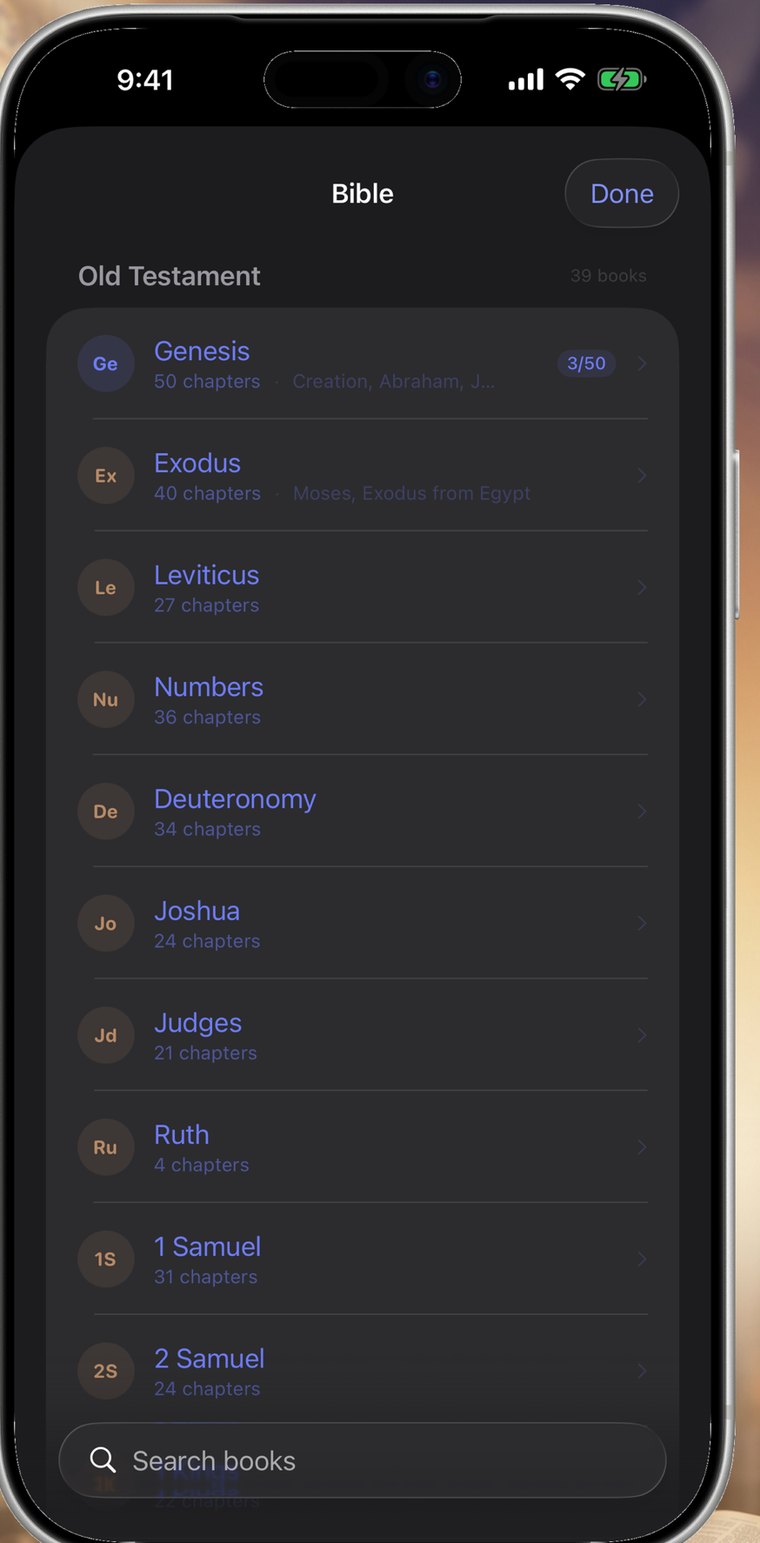
There is no need to settle this permanently. RSVP Bible carries 26 translations across 20 languages, KJV, WEB, BSB and ASV among the English ones, and switching between them takes a tap. A workable approach for a beginner is to read a modern translation for the plan and consult the KJV when a familiar verse sounds different from the version you learned.
Set the session length, not the chapter count
Beginners tend to overcommit on day one and then negotiate downward. Committing to a fixed fifteen minutes is more durable than committing to five chapters, because fifteen minutes is the same on a good day and a hard one. Read at a steady pace, stop when the time is up, and mark where you stopped.
If your attention drifts, a shorter session at a faster pace often works better than a long slow one. RSVP Bible presents one word at a time at a speed you choose, keeps your place when you close it mid-chapter, and shows a Verse of the Day on the progress screen for the days when a full session is not going to happen.
Questions
Should a beginner start with the King James Version?
The KJV is worth knowing and much of its phrasing shapes how English speakers quote Scripture, but its 1611 English adds a layer of work on a first read. Many beginners do better reading a modern translation and keeping the KJV alongside for comparison.
How much should I read in one sitting as a beginner?
Two to three chapters, roughly ten to fifteen minutes. Long sessions early tend to produce a strong first week and nothing afterwards. A small daily amount you keep is worth more than an ambitious plan you abandon.