Pay-what-you-wish and free museum hours in NYC
Adult admission at the large New York museums sits around $25 to $30, and nearly all of them run a weekly or monthly window where you pay what you want or nothing at all. Those windows come in three shapes: residency-based (the Metropolitan Museum of Art is pay-what-you-wish for New York State residents and for students from New York, New Jersey and Connecticut with ID), sponsored free evenings (a fixed night each week or month, usually needing a free timed reservation booked days ahead), and age-based (the Whitney admits visitors 25 and under free every day). Confirm on the museum’s own visit page the week you go, because sponsors and hours change between seasons.
Plan a pay-what-you-wish museum visit in New York, step by step
- Confirm the current window. Free nights move when a sponsor changes. The museum’s own visit page is the only reliable source, and listicles go stale within a season.
- Check whether you qualify. Residency-based admission needs an ID showing a New York State address, or a student ID from a tri-state school. Age-based entry needs a document with your birthdate.
- Set a reminder for the reservation release. Timed tickets for free evenings often go live a week ahead and are taken within hours at the popular institutions.
- Book the latest slot offered. The first hour of a free night is the crowded one. The final 90 minutes are calmer, and the galleries empty as you work through them.
- Bring the ID you claimed. Admissions desks do ask. Being turned back at the counter with a queue behind you is an avoidable way to start an evening.
The three kinds of free
Residency-based pricing is the oldest arrangement in the city and the most generous, because it applies during every open hour rather than one evening a week. The suggested amount is genuinely a suggestion: you name a figure at the desk and nobody argues with it. It covers residents of New York State, and students from New York, New Jersey and Connecticut, ID in hand.
Sponsored evenings are a corporate underwriter buying a few hours of open doors, typically on a weeknight and typically ending somewhere between 8 and 10pm. They almost always require a free timed ticket booked online in advance, and both the sponsor and the hours can change from one year to the next.
Age-based entry has spread over the past few years, with several institutions now admitting everyone under a cutoff free on any day. Add the museums that are free by charter, plus every commercial gallery in the city, and a determined week of looking at art in New York can cost nothing at all.
The reservation is the hard part, not the money
For the well-known free nights the constraint is inventory. Tickets go live on a schedule, often a set day and hour in the preceding week, and the good slots disappear that same afternoon. Two habits fix it: put the release time in your calendar as a recurring event, and take the unfashionable slot. A 7:15 entry on a Friday is far easier to get than 5:30, and the museum is a nicer place at 7:15 anyway.
If the online window closes before you get there, check whether the museum runs a standby or walk-up line. Several do, and on a cold or rainy night the line moves quickly.
Getting more out of a free evening
A free night compresses a full day of visitors into three hours, which makes the blockbuster exhibition the worst thing to attempt. Go to the permanent collection instead, choose two or three rooms and stay in them. Coat check is the real bottleneck, so wear something you can carry. Plenty of institutions program the evening with live music or an open bar, which turns the visit into a proper night out rather than a hurried version of a Saturday afternoon.
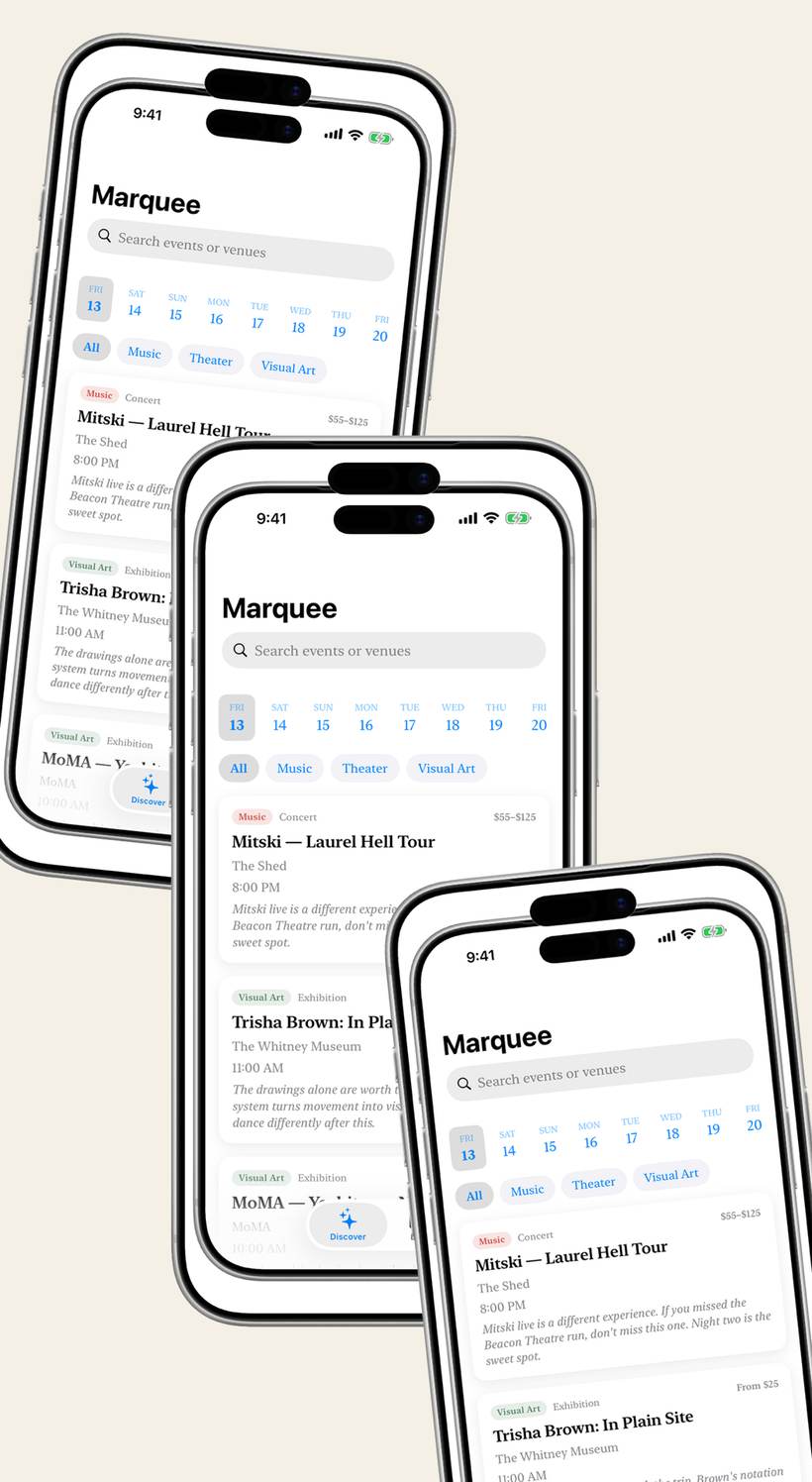
It helps to know which night belongs to which museum, since the free windows are staggered across the week by design. Marquee lists museum evenings on the same dated feed as the concerts and theater, with venue, hour and price on each card, so a Thursday plan does not start with six museum websites open in tabs.
What is free in New York every day
Commercial galleries never charge, and there are hundreds of them across Chelsea, the Lower East Side, Tribeca and Bushwick, most open Tuesday through Saturday. University galleries, artist-run project spaces and the exhibition rooms inside the big libraries are free as well, and they show serious work rather than leftovers. If the goal is looking at art instead of crossing an institution off a list, the free tier here is deep enough to fill a year of evenings.
Questions
Is pay-what-you-wish the same as free?
Not quite. The museum names a suggested contribution and you decide what to give, sometimes against a small minimum. Staff do not question the amount, and handing over a dollar is a routine transaction at those desks.
Do I need a New York ID for pay-what-you-wish at the Met?
Yes, an ID showing a New York State address, or a student ID from a school in New York, New Jersey or Connecticut. Without one, the standard adult ticket price applies.